Summer means more time outdoors—but it also means increased exposure to the sun's ultraviolet (UV) rays. While enjoying time outside is an important part of the season, protecting your skin should be part of your routine every day.
During UV Safety Awareness Month, it's a great time to learn the warning signs of melanoma, the most serious form of skin cancer. When detected early, melanoma is highly treatable, making regular skin checks an important part of protecting your health.
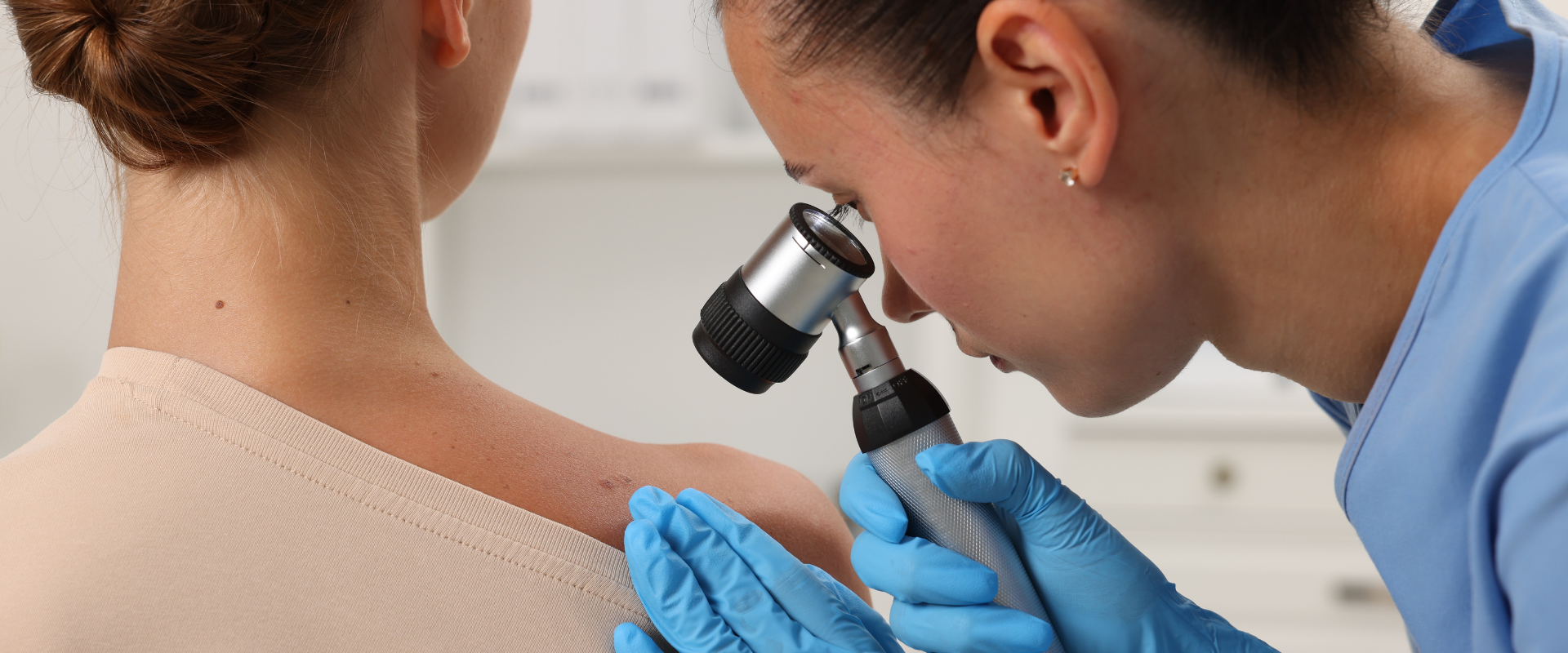
What Is Melanoma?
Melanoma develops in the cells that produce melanin, the pigment that gives skin its color. Although it is less common than other forms of skin cancer, melanoma is more likely to spread if not detected and treated early.
Know the ABCDEs of Melanoma
Dermatologists recommend using the ABCDE Rule when checking your skin for new or changing moles or spots.
A — Asymmetry
If one half of a mole doesn't match the other half, it should be evaluated.
B — Border
Look for irregular, scalloped, or poorly defined edges.
C — Color
A mole with multiple shades of brown, black, tan, red, white, or blue may be cause for concern.
D — Diameter
Melanomas are often larger than 6 millimeters (about the size of a pencil eraser), but they can be smaller when first detected.
E — Evolving
Perhaps the most important warning sign is change. If a mole changes in size, shape, color, elevation, or begins to itch, bleed, or crust, it should be evaluated by a healthcare provider.
Don't Forget the "Ugly Duckling" Sign
Not every melanoma follows the ABCDE rule. Another helpful tip is to look for the "ugly duckling" sign—a spot that simply looks different from all of your other moles.
If one mole stands out from the rest or catches your attention because it looks unusual, it's worth having it examined.
How to Protect Your Skin
While early detection is important, prevention is just as valuable.
Simple ways to reduce your risk include:
- Apply a broad-spectrum sunscreen with SPF 30 or higher every day.
- Reapply sunscreen every two hours when outdoors or after swimming or sweating.
- Wear protective clothing, a wide-brimmed hat, and UV-blocking sunglasses.
- Seek shade when the sun's rays are strongest, typically between 10 a.m. and 4 p.m.
- Avoid indoor tanning beds.
Perform Regular Skin Self-Exams
You know your skin better than anyone. Taking a few minutes each month to check your skin from head to toe can help you notice new or changing spots early.
If you notice a mole or lesion that meets any of the ABCDE criteria—or simply looks different from the rest—don't ignore it. Schedule an evaluation with a healthcare provider or dermatologist. Early detection remains one of the best tools in successfully treating melanoma.
Protect Your Skin Year-Round
Whether you're spending the day at the beach, walking through your neighborhood, or enjoying a Chicago summer festival, taking steps to protect your skin can help lower your risk of skin cancer.
A few minutes spent applying sunscreen and performing regular skin checks can make a lasting difference in your long-term health.